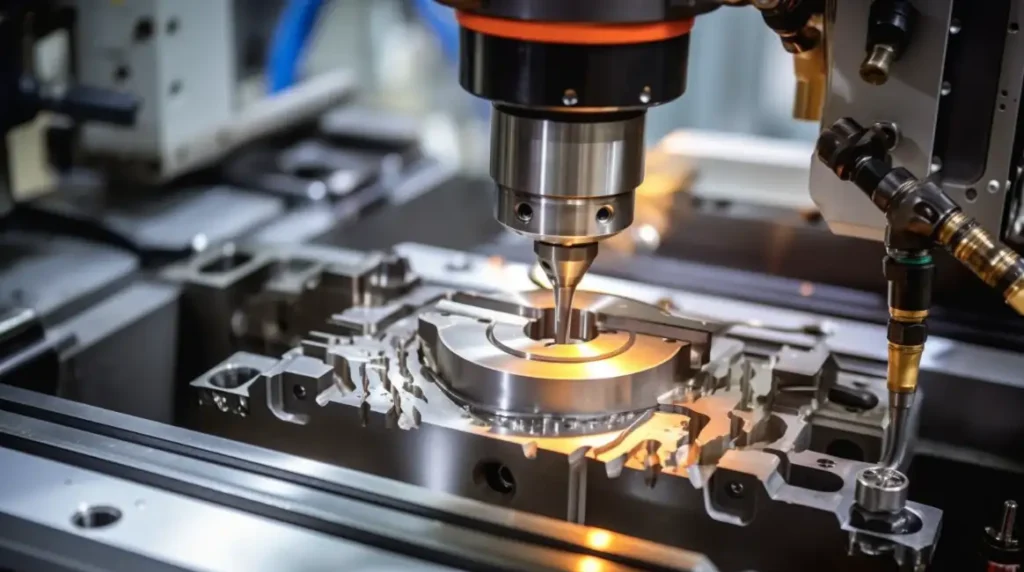
Function of a Reamer: Precision in Hole Finishing
In the world of manufacturing, machining, and metalworking, accuracy is everything. When creating holes in materials such as metal, plastic, or wood, drilling alone is often not enough to achieve the desired smoothness, precision, and size accuracy. This is where a reamer comes into play. A reamer is a precision cutting tool designed to finish and slightly enlarge an existing hole to a highly accurate diameter with a smooth surface finish.
This article will cover the primary function of reamer, how it works, its types, and its importance in various industries.
1. Primary Function of a Reamer
The main function of a reamer is to produce an accurate, smooth, and round hole by removing a small amount of material from a pre-drilled or bored hole. Unlike drills, which create holes, reamers are finishing tools that improve:
- Diameter Accuracy – Achieving precise tolerance levels, often within microns.
- Surface Finish – Providing smooth, polished hole walls, reducing friction and wear in mechanical assemblies.
- Roundness & Straightness – Correcting any minor irregularities from the drilling process.
In short, drilling is for making the hole; reaming is for making it perfect.
2. How a Reamer Works
A reamer works by cutting away small amounts of material as it rotates inside an existing hole. It typically has multiple cutting edges arranged along its cylindrical body, which:
- Engage the inner surface of the hole.
- Slice off thin layers of material.
- Leave behind a uniform, high-quality finish.
The cutting action is gentle compared to drilling since reaming is designed for minimal material removal—usually between 0.1 mm to 0.5 mm of diameter.
3. Types of Reamers
Reamers come in several variations, each suited for specific applications:
a. Hand Reamers
- Operated manually with a tap wrench.
- Ideal for low-volume work and adjustments.
- Slightly tapered at the front for easy entry.
b. Machine Reamers
- Used with drill presses, lathes, or milling machines.
- Suitable for high precision and production environments.
- Provide uniform cutting speed and pressure.
c. Adjustable Reamers
- Feature blades that can be expanded or contracted.
- Useful for accommodating various hole sizes.
- Cost-effective for situations with multiple size requirements.
d. Tapered Reamers
- Used to create or finish tapered holes.
- Common in applications requiring tight-fitting pins.
e. Shell Reamers
- Hollow and mounted on an arbor.
- Preferred for larger diameter holes where weight reduction is beneficial.
4. Importance in Manufacturing
Reamers are essential for industries that demand precision and reliability in component assembly, such as:
- Automotive – For engine cylinder bores, bearing housings, and gearbox components.
- Aerospace – Ensuring tight tolerances in airframe and turbine parts.
- Metal Fabrication – Improving the fit of bolts, pins, and other fasteners.
- Tool and Die Making – Creating accurate holes in molds and dies.
5. Advantages of Using a Reamer
Using a reamer offers several benefits over relying on drilling alone:
- Higher Accuracy – Achieves tolerances as tight as H7 in ISO standards.
- Improved Surface Quality – Minimizes friction and wear in mechanical assemblies.
- Consistency – Maintains uniformity in mass production.
- Reduced Tool Wear – As reaming removes minimal material, it extends the life of drills.
6. Best Practices for Reaming
To get the best results from a reamer:
- Pre-Drill Correctly – Leave the correct allowance for reaming (typically 0.2–0.5 mm).
- Use Proper Speeds and Feeds – Reaming speeds are usually 50–70% of drilling speeds.
- Lubricate – Apply cutting fluids to reduce heat and improve finish.
- Avoid Reverse Rotation – Reversing can damage the cutting edges.
- Secure the Workpiece – Stability ensures concentricity and accuracy.
7. Common Mistakes to Avoid
- Over-Drilling Before Reaming – Leaving too little material may cause chatter and poor finish.
- Incorrect Tool Selection – Using the wrong reamer type can affect tolerance and durability.
- Skipping Coolant – Increases friction, heat, and tool wear.
8. The Role of Reaming in Quality Control
In precision engineering, tolerance deviations can lead to malfunction, part rejection, or safety hazards. Reaming ensures:
- Tight Fits – Essential for press-fit and interference-fit parts.
- Reduced Vibrations – A smooth hole surface minimizes mechanical noise and wear.
- Reliable Assembly – Ensures that parts align correctly and function as intended.
Conclusion
A reamer may appear to be a simple tool, but its function is critical in achieving high-precision, smooth, and accurate holes in manufacturing. From automotive engines to aerospace components, reaming is a finishing process that ensures assemblies work flawlessly. Whether operated by hand or machine, using the right type of reamer with proper technique can make the difference between a good fit and a perfect one.